






WHY YOUR SKIN IS PIGMENTED AND
HOW TO STOP IT
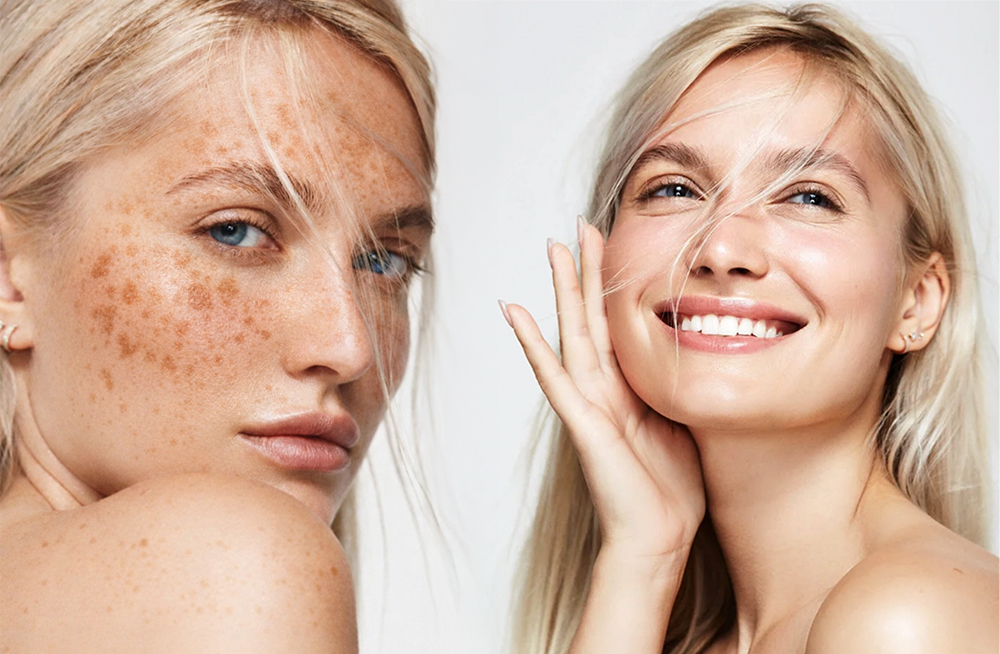
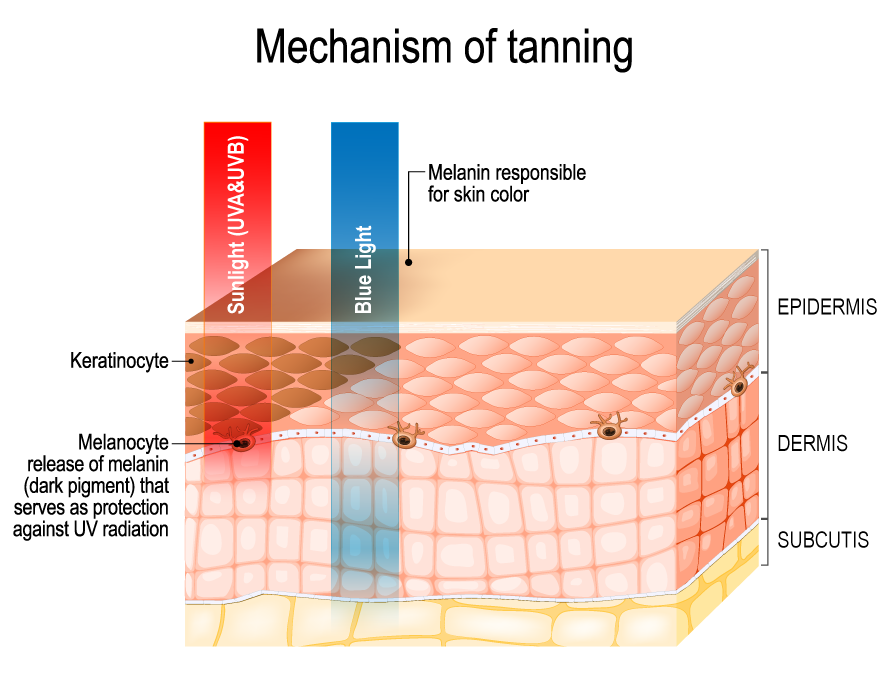
The color of skin is due to a natural pigment called melanin which is synthesized in special cells namely melanocytes and located in the deeper layer of the epidermis. Brown, red or pink, small or large, hyperpigmentation is a darkening of skin due to higher than normal levels of melanin. Any part of skin that is darker than the rest is hyper-pigmented, no matter where it occurs. The most important thing to do is wear sunscreen-even if you don’t see discoloration on your skin, you should protect it from the sun and blue light to lessen your chances in the future.
JUMP TO
- Why hyperpigmentation is on the rise
- How hyperpigmentation forms
- Types of discoloration
- How long it takes to see the darkness
- How the sun and blue light cause dark spots
- Why the upper lips get darker
- Dark shadows on body
- How to protect your skin
- How to treat
- How to get the maximum benefit from the treatment
- How to get the maximum benefit from the treatment
- How long does it take to see results
WHY HYPERPIGMENTATION IS ON THE RISE
Sun Damage
UV rays produce excess melanin, which is deposited in the skin, and result in dark spots. Despite the fact that sun protection is necessary daily, not every person wears sunscreen every day of the year, which is another reason for skin discoloration.
Blue Light Damage
Blue light has been clinically proven to induce long-term hyperpigmentation by affecting the melanocytes in the skin. Research indicates that blue light can reach deeper into our skin than UVA and UVB rays, and it’s causing trouble all along the way.
Aging
With age, melanocyte (skin cells that make melanin in the bottom layer of skin) distribution becomes less controlled, causing dark spots to form instead of clear, even skin.
Birth Control
Birth control boost estrogen levels in the blood, which can lead to an influx of melanin production.
Inflammation
As the skin heals from an injury it can darken. Trauma is a main cause of hyperpigmentation.
Acne
The more severe the acne, the more inflamed the skin is and the more likely it is to pigment. Inflamed areas naturally produce more melanin.
Hormones
Pregnancy, menopause and birth control, "sudden shifts of hormones", can cause hyperpigmentation to form.
Lasers and Peels
Lasers and strong chemical peels cause inflammation. The body may respond with brown patches.
Medication
Some antibiotics (sulfonamides and tetracyclines) and medications to treat Parkinson's disease, diabetes and heart disease, can lead to darker patches as an allergic reaction or because of increased sun sensitivity.
HOW HYPERPIGMENTATION FORMS
STEP 1
Melanin production is triggered
A trigger (think sun and blue light exposure, inflammation or hormonal surge etc.) sends a signal to the hormones that control melanin production. Once the signal is sent, the enzyme tyrosinase becomes activated. Tyrosinase is responsible for telling the body to start the process of creating more melanin.
STEP 2
The melanocyte cells start producing pigments
Once tyrosinase sends a message to the melanocytes, the production of pigment starts. The newly created pigment is then packaged into little bundles called melanosomes.
STEP 3
Pigment is distributed
Next, the melanosomes disperse the pigment through the dermis up to the epidermis through dendrites (extensions from cells that allow them to communicate with one another). If the pigment doesn’t make its way up to toward the surface and live in the dermis, it will be harder to erase.
TYPES OF DISCOLORATION
HOW LONG IT TAKES TO SEE THE DARKNESS
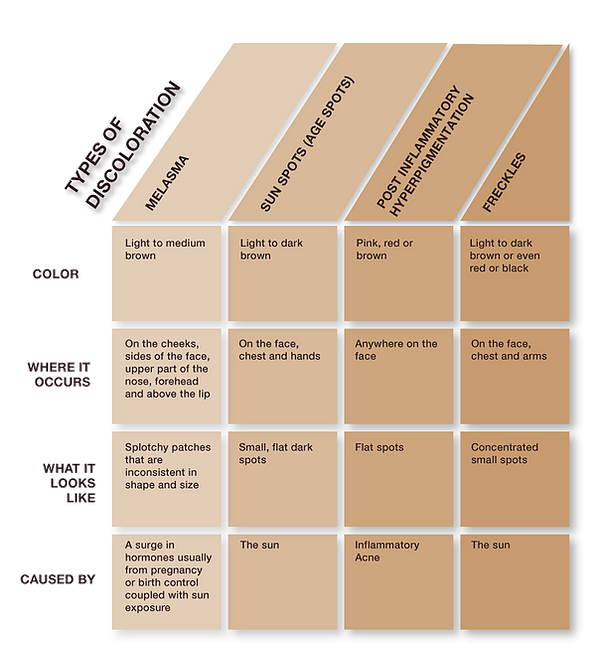
If the cause is the sun, brown spots can show immediately.
If the cause is birth control or pregnancy, brown patches can show in a few weeks to a few months.
If the cause is acne-related, discoloration can show in a few weeks.
If the cause is trauma from a peel or laser, hyperpigmentation can show immediately after the skin has healed.
HOW THE SUN AND BLUE LIGHT CAUSE DARK SPOTS
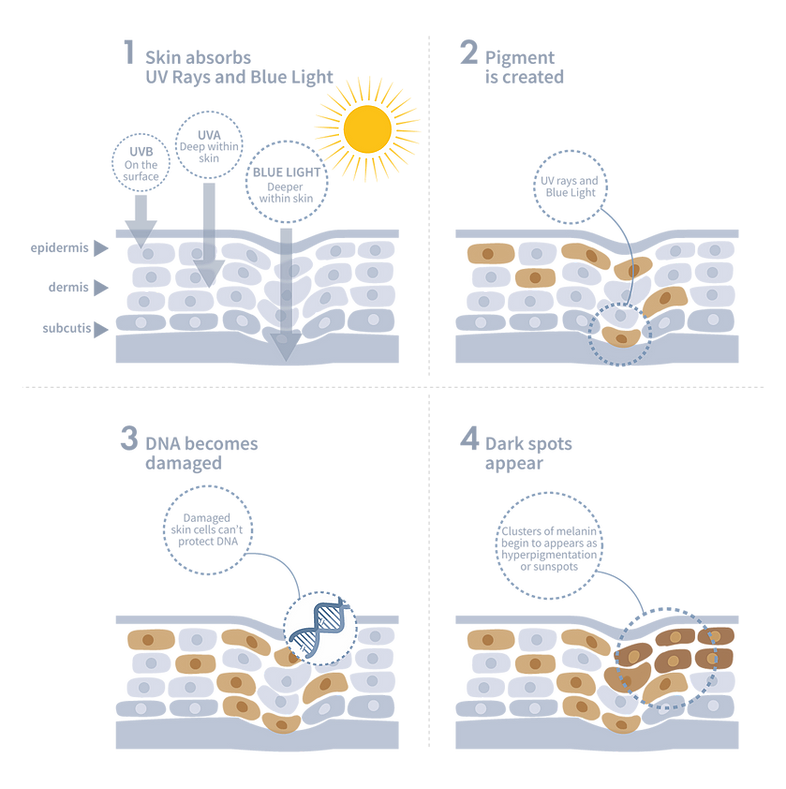

- UVB: DNA damages and sunburn
- UVA: DNA oxidation, immune suppression and pigmentation
- Blue Light: oxidative stress and persistent hyperpigmentation
WHY THE UPPER LIPS GET DARKER
It is not uncommon for the skin above upper lip to become dark- it’s actually changed to skin tone and, most times, it is not hair that’s causing the darkness. Waxing and threading the upper lip can cause trauma to the skin, leading to hyperpigmentation. An increase in hormones along with sun exposure can be reason for dark upper lip. The best way to correct this problem is to stop the cause of discoloration and begin using lumiskin on the area to decrease the pigment. Using sunscreen on the area during and after treatment is a must to make sure that you suppress the pigment from coming out.
DARK SHADOWS ON BODY
As more people discover bikini waxing, the more suffer from dark or discolored sensitive areas such as the bikini line or underarms.





PROTECT YOUR SKIN TO PREVENT DAMAGE
USE SUNSCREEN WITH AN SPF OF 50+
Full spectrum sun protection is the best, and most important thing you can do to protect your skin from hyperpigmentation. Make sure your sunscreen protects from UVA, UVB and Blue light.
APPLY ANTIOXIDANTS
A good serum that is loaded with antioxidants can actually help prevent inflammation and breakouts, limiting the risk of hyperpigmentation, too.
PROTECT YOUR EYES
The skin that surrounds the eye can be quick to develop dark spots if it is not protected. To get the maximum level of protection possible, wear a pair of sunglasses after you have applied SPF.
WEAR A HAT
No matter how much SPF you have applied, it is not enough. Wide-brimmed hats are best since they add another level of protection by blocking the face from the sun.
HOW TO TREAT
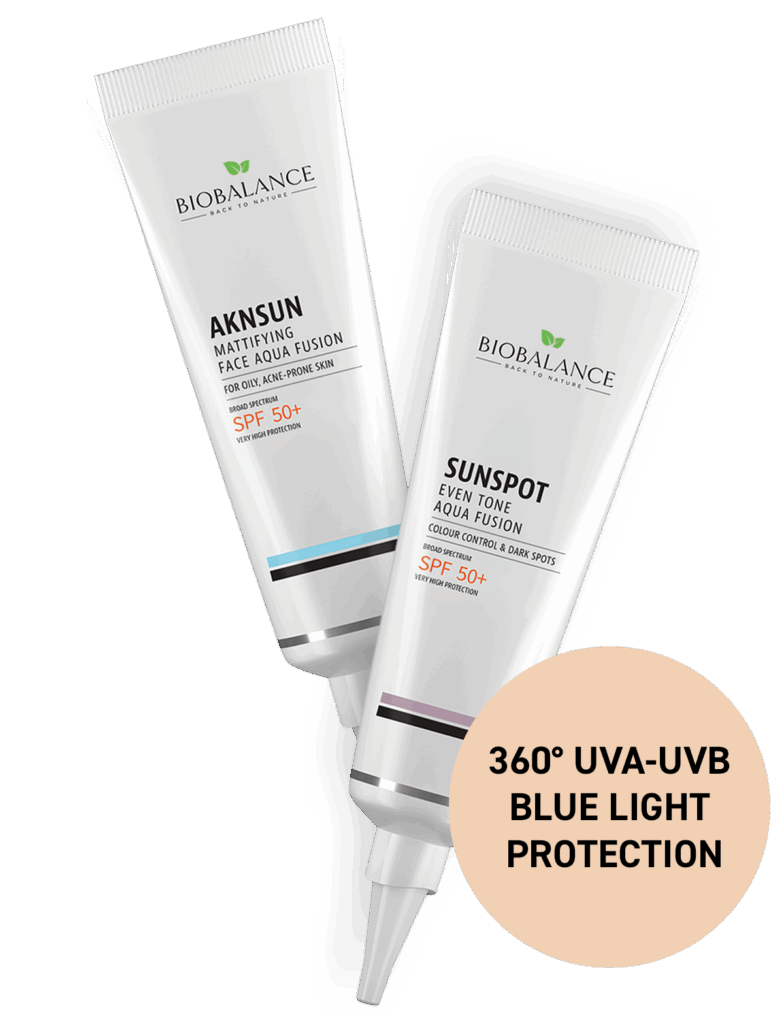
FULL SPECTRUM SUNSCREEN
WHO?
For anyone who wants to protect their skin against aging and hyperpigmentation
When?
Anytime you are exposed to sun or smart devices
Where?
Outdoor and indoor, at home, office, park…
Why?
To prevent deep dark spots caused by sun and digital devices.
How:
Just apply on face and neck anytime, anywhere you exposed to sun or blue light emitted by digital screens.
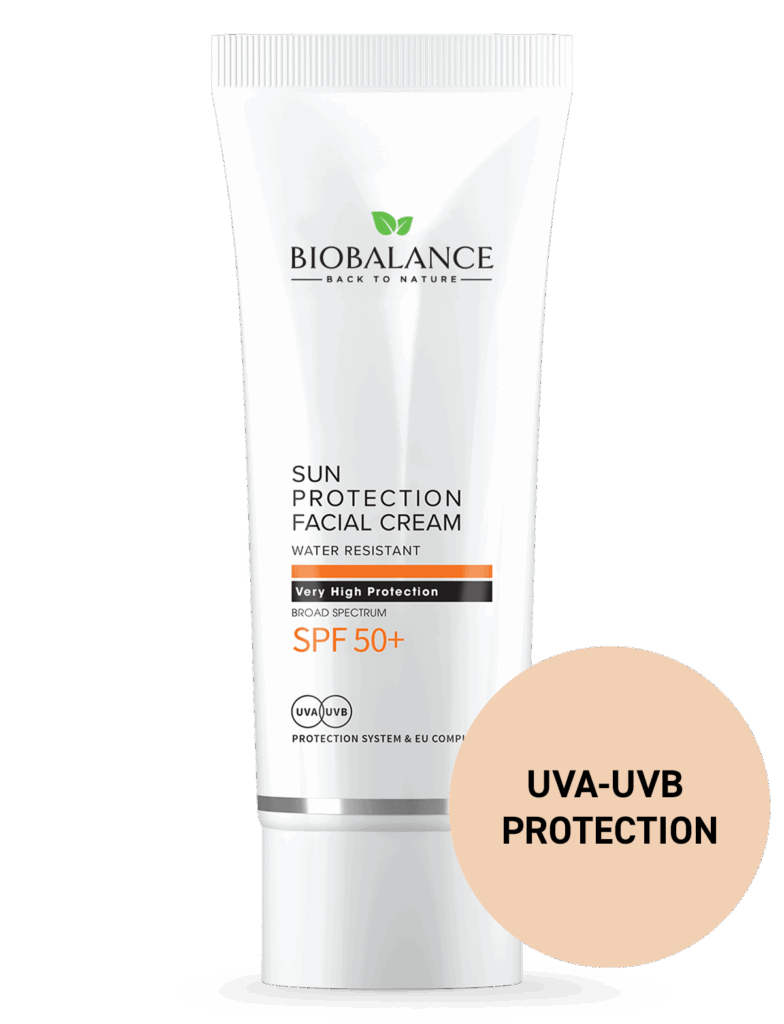
BROADSPECTRUM SUNSCREN
WHO?
For anyone who wants to protect their skin against aging and hyperpigmentation.
When?
Anytime you are exposed to sun.
Where?
Outdoor, at park, beach, on road.
Why?
To prevent deep dark spots caused by sun.
How:
Just apply on face and neck anytime, anywhere you exposed to sun.
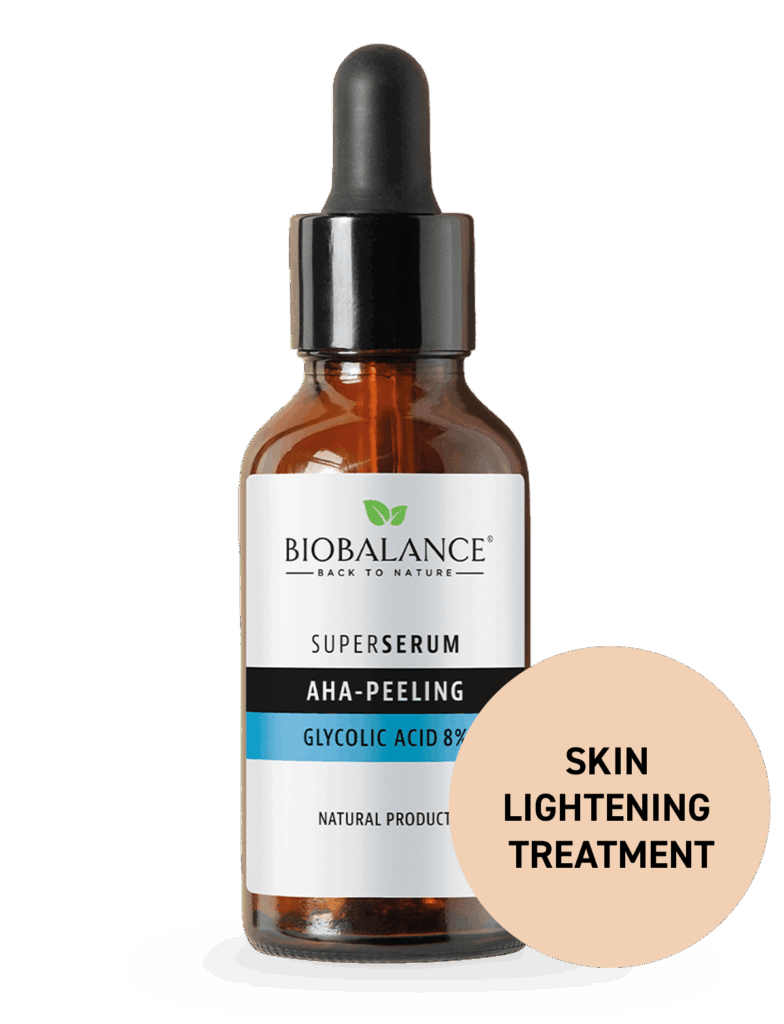
8% GLYCOLIC ACID (AHA)
WHO?
For anyone who wants to reduce skin discoloration.
When?
At night
Why?
For clear and more radiant skin. Exfoliating skin with glycolic acid will clear dead skin cells where the pigment may be trapped.
How:
Just apply on face before going to bed.
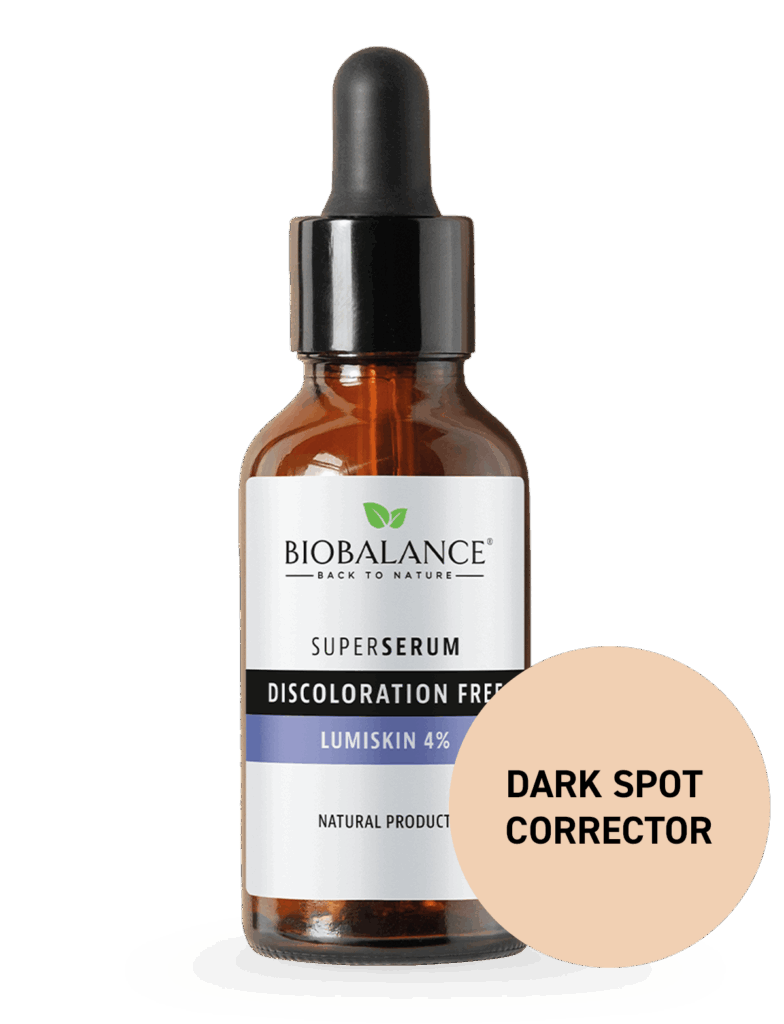
4% Lumiskin
WHO?
For anyone who wants to reduce hyperpigmentation.
When?
Morning and night
Why?
In order to reduce deep dark spots by decreasing the course of melanin by 70%.
How:
Just apply on face two times a day.
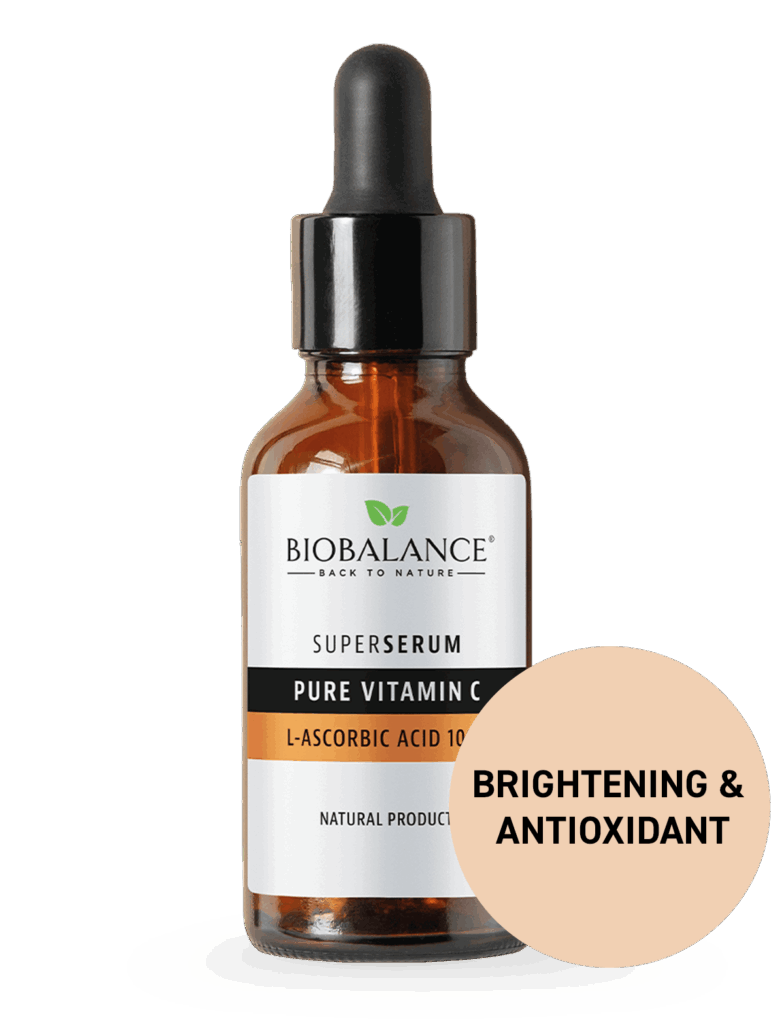
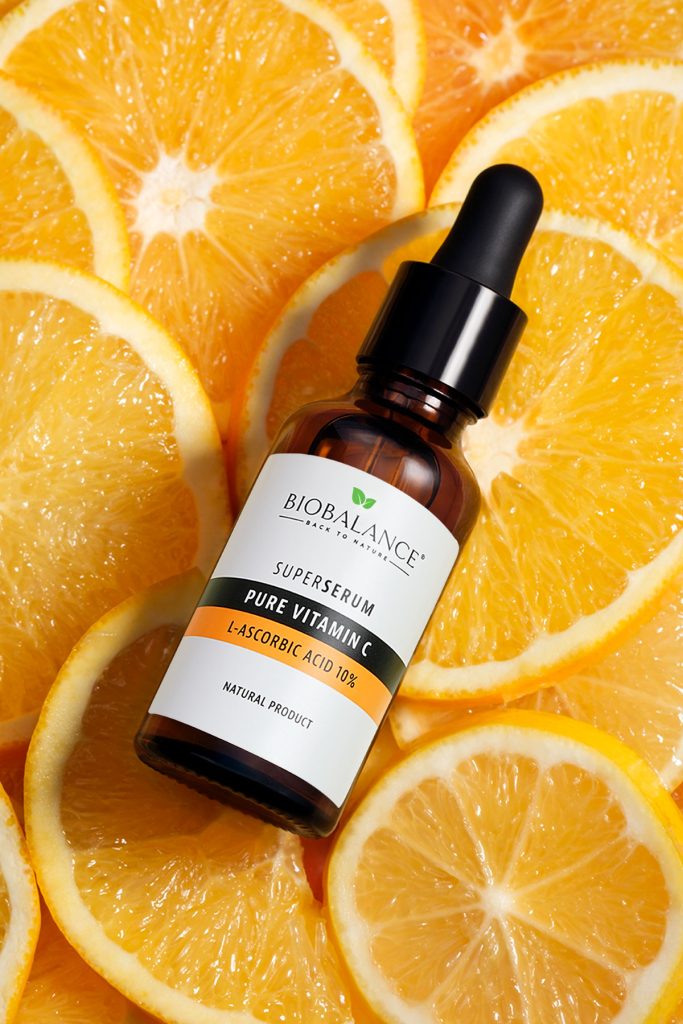
10% VITAMIN C
WHO?
For anyone who wants to protect their skin against aging and reduce hyperpigmentation.
When?
Morning and night.
Why?
It is an antioxidant that evens out discoloration and creates healthier stronger skin.
How:
Just apply on face once or twice a day depending on your skin type.
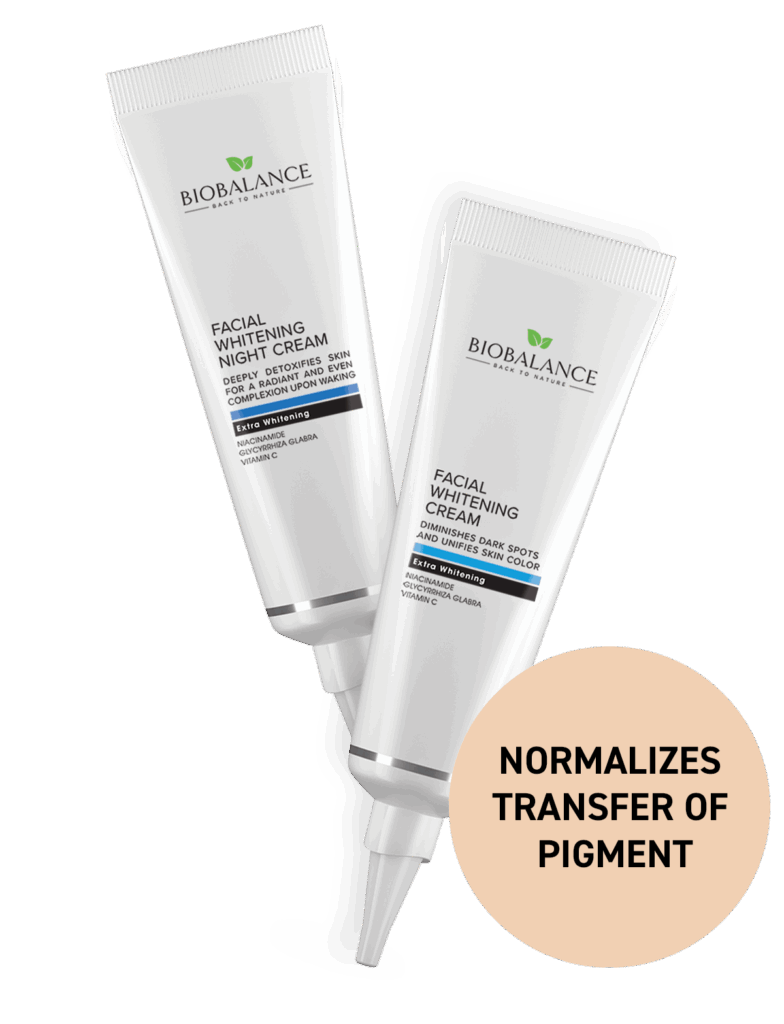
NIACINAMIDE & LICORICE ROOT EXTRACT
WHO?
For anyone who wants to reduce dark spots and moisturize skin.
When?
Morning and night
Why?
To reduce age spots, sun spots, etc., or to obtain an overall fairer complexion.
How:
Just apply on face twice a day.
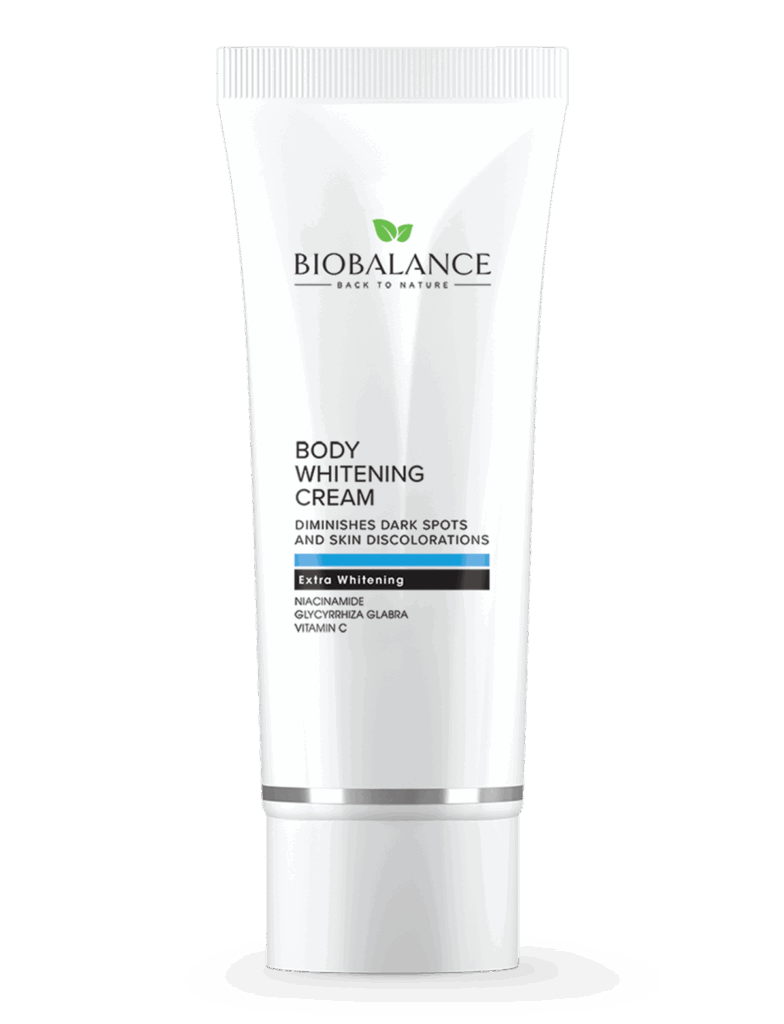
NIACINAMIDE & LICORICE ROOT EXTRACT
WHO?
For anyone who wants to reduce dark spots and moisturize skin.
When?
Morning and night.
Why?
To reduce age spots, sun spots, and dark shadows under arms around bikini lines, on elbows and knees.
How:
Just apply on skin twice a day.
How to get the maximum benefit from the treatment in order to lighten dark spots?
The cause of the discoloration should be stopped if it is possible.
Treatment should be used regularly.
Use sunscreen and reapply it often if the affected area is going to be exposed to UV rays and blue light for a long time.
Using sunscreen on the area after treatment is a must to suppress the pigment from coming back out.
Skin should be protected from the sun with protective clothes such as hat and sunglasses during and after treatment.
How Long Does It Take To See Results?
Regardless of what caused to uneven skin tone, the slightest bit of sun exposure can trigger skin to start melanin production. That’s why protecting the skin from sun is a determinative factor to see quick results.
Surface Pigmentation or Deep Pigmentation:
Where hyperpigmentation lives in the skin determines how dark skin will be. When pigmentation is on the surface, the discoloration is more of a light brown color and is more diffused. It responds faster to the treatment.
Pigmentation deep within skin takes on more of a dark brown or gray tone and it is solid and dense. Deep pigmentation is more resilient and can come back easily. It takes more time to respond to the treatment than surface pigmentation.